October 21, 2026
The features that matter most are the basics, but really good ones: solid locks on every door and window, good lighting in the places you walk at night, working smoke and carbon monoxide detectors, and a landlord who responds quickly when something breaks. Fancy extras like gates and app-based entry can add something, but they're not a substitute for the basics. Here's how to tell the difference, and what to check before you sign.
Start With the Basics
These are worth confirming in person, not just trusting a listing:
- Door locks that work properly. Deadbolts on exterior doors, and locks that actually turn smoothly. Ask whether locks are changed or re-keyed between tenants.
- Window locks. Especially on ground-floor and balcony-level units. Open and close each one and make sure they latch.
- Smoke and carbon monoxide detectors. Check that they're present and that they work. Your lease may say who's responsible for batteries - it could be you.
- Lighting. Walk the path from the parking area or bus stop to your door, ideally after dark. Dim stairwells, dark corners, and burned-out lights are worth noting.
Entry Systems: Gates, Keypads, and Apps
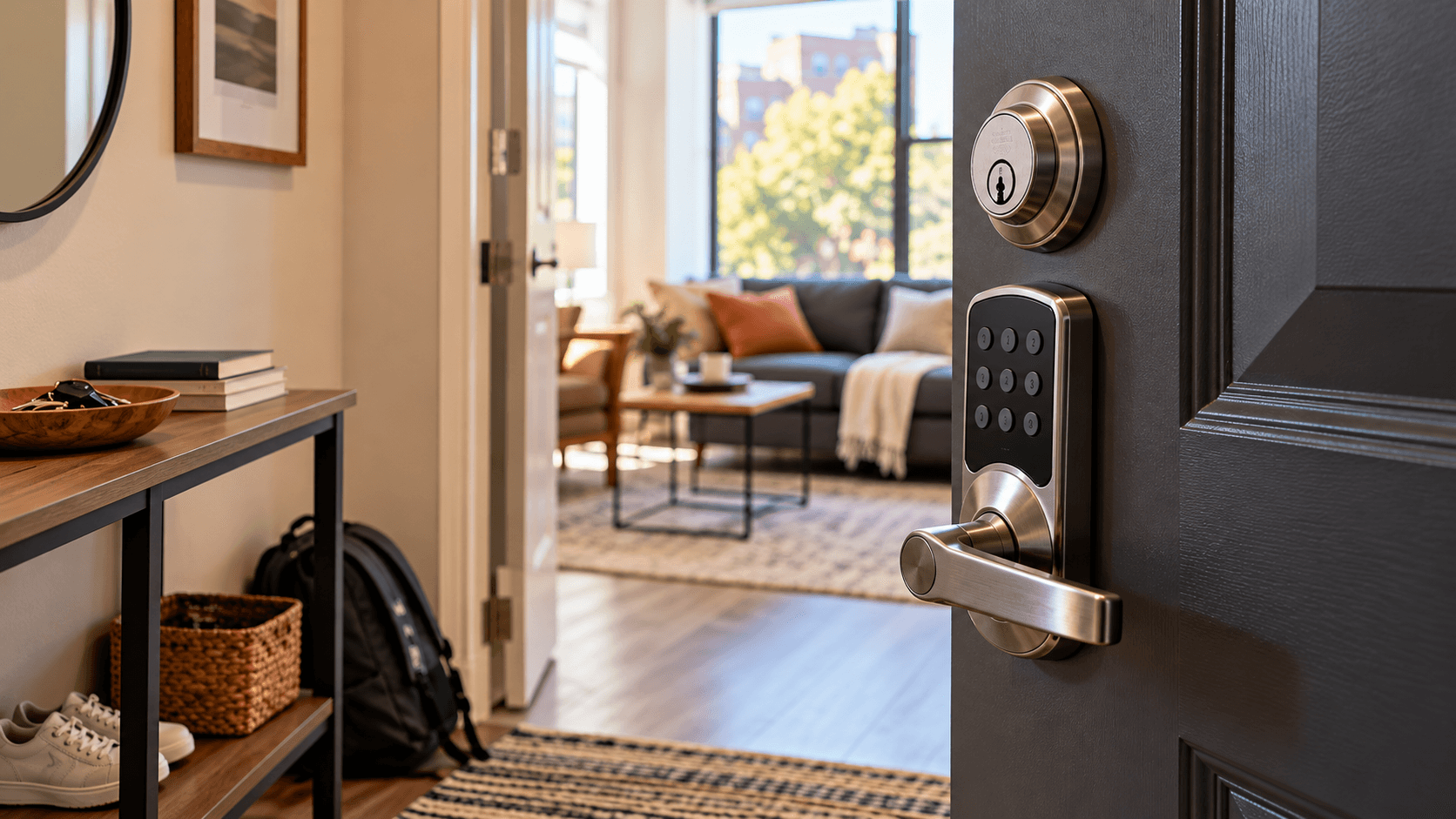
Gated entrances, keyless entry, and app-controlled doors are common selling points. They can help by making it harder for strangers to wander in, but they work best when they're actually maintained and used. A gate that's propped open, a broken keypad, or a door that doesn't latch behind you undercuts the whole system. When you tour, watch how the entry actually works day to day, and ask what happens when it breaks and how fast it gets fixed.
Where Your Unit Is Matters
The same building can feel very different depending on which unit you're in. Ground-floor units and units with easy outside access (a patio door, a window facing a walkway) can be easier to reach from outside, which makes strong locks and good lighting more important. Units higher up or deeper inside a building have a different set of trade-offs. There's no single right answer, just a reason to think about the specific unit, not just the property.
Package and Mail Security
Package theft is a real annoyance at many apartment communities. Ask how packages are handled: a staffed office, lockers, a mailroom, or just left at the door. If packages tend to sit out, consider having deliveries sent to a locker, a pickup point, or a trusted neighbor or friend.
Ask the Landlord Directly
A few questions are worth asking before you sign, and worth getting answered in writing where it matters:
- How are maintenance and safety issues reported, and how quickly are they usually handled?
- Are locks re-keyed between tenants?
- Is there on-site or after-hours management or security, and what does it actually cover?
- Who is responsible for smoke and carbon monoxide detector batteries?
- Are there any known recurring issues, like break-ins or broken entry systems, and how were they handled? Do your own research on this too.
Keep in mind that a landlord's answers, and any listing's marketing, aren't a guarantee.
Things You Can Add Yourself
Some of the most useful security steps cost little and don't require your landlord. Always lock your door and windows, even when you're home or just stepping out. Consider a simple door stopper alarm or a window lock insert if your lease allows it, and check with your landlord before changing anything permanent, like locks. Renters insurance can also help cover belongings if something does go wrong.
When Something Feels Off
If you ever feel unsafe, trust that instinct. If it's an emergency, call 911. For ongoing concerns, report them to your landlord in writing and keep a record, and consider contacting campus police or your school's housing or student affairs office, which often have resources for students living off campus. If the situation doesn't get fixed, and you still feel unsafe, you could consider changing apartments, or changing complexes altogether.
FAQs
Q - Is a gated apartment complex safer than one without a gate?
A - Not automatically. A gate can help, but only if it's working and used properly. Locks, lighting, and how quickly the landlord fixes problems often matter just as much.
Q - What security features should I check first when touring an apartment?
A - Door and window locks, working smoke and carbon monoxide detectors, and lighting along the path to your door at night.
Q - Should I worry more about a ground-floor unit?
A - Ground-floor units can be easier to reach from outside, so strong locks and good lighting matter more. It's a reason to check the specifics, not an automatic dealbreaker.
Q - Can I change the locks myself?
A - Check your lease and ask your landlord first. Many leases restrict changing locks, but you can ask whether locks are re-keyed between tenants and use removable add-ons if allowed.
Q - What should I do if I feel unsafe where I live?
A - In an emergency, call 911. Otherwise, report concerns to your landlord in writing, keep a record, and reach out to campus police or your school's housing office for support.
Off-campus housing transitions can be frustrating and confusing. Searching for answers and not sure where to start? That's why we're here. Email the Team at hello@myleasetakeover.com, or send us a message on Instagram or Facebook. We’re glad to help.
Written by the Team at myleasetakeover.com | Join the Takeover.
We started myleasetakeover.com because we've been there: a housing plan that changed overnight with no clear next step. We're here to help students and parents navigate housing transitions, so you don't have to figure it out alone.
More safety tips just for you...
 Janelle Rawlston