November 23, 2026
The best way to protect your deposit and your sanity as a renter is to keep a simple digital record of everything: your lease, your messages with the landlord, your payments, and dated photos of the unit. The good news: you don't need special software. One folder, a few subfolders, and a habit of saving things the day they happen is enough. Here's how to set it up, what to keep, and how to use it if something goes wrong.
Part of the reason TakeOver exists is a document we never saw. Our son had signed a renewal for another school year, and we only found out after he needed to leave. As we wrote in Why We Built It, "Nobody notified us, even though we were guarantors on the lease." A shared folder wouldn't have stopped him from signing, but if our family had talked about what to do with lease documents beforehand, we might have seen it the week it happened.
Why a Paper Trail Matters
Most renter disputes come down to who can prove what. Did you report the leak, and when? Was that scratch there at move-in? Did you pay the fee? Without records, it becomes your word against the landlord's, and the landlord usually has the files. With records, you can settle most questions in a single email.
A paper trail also helps in other situations: if you need to prove rental history for a future application, document a repair request, work out who owes what among roommates, or hand things off cleanly in a lease takeover. And you don't need to save everything forever, only the right things saved when they happen.
Step 1: Set Up One Place for Everything
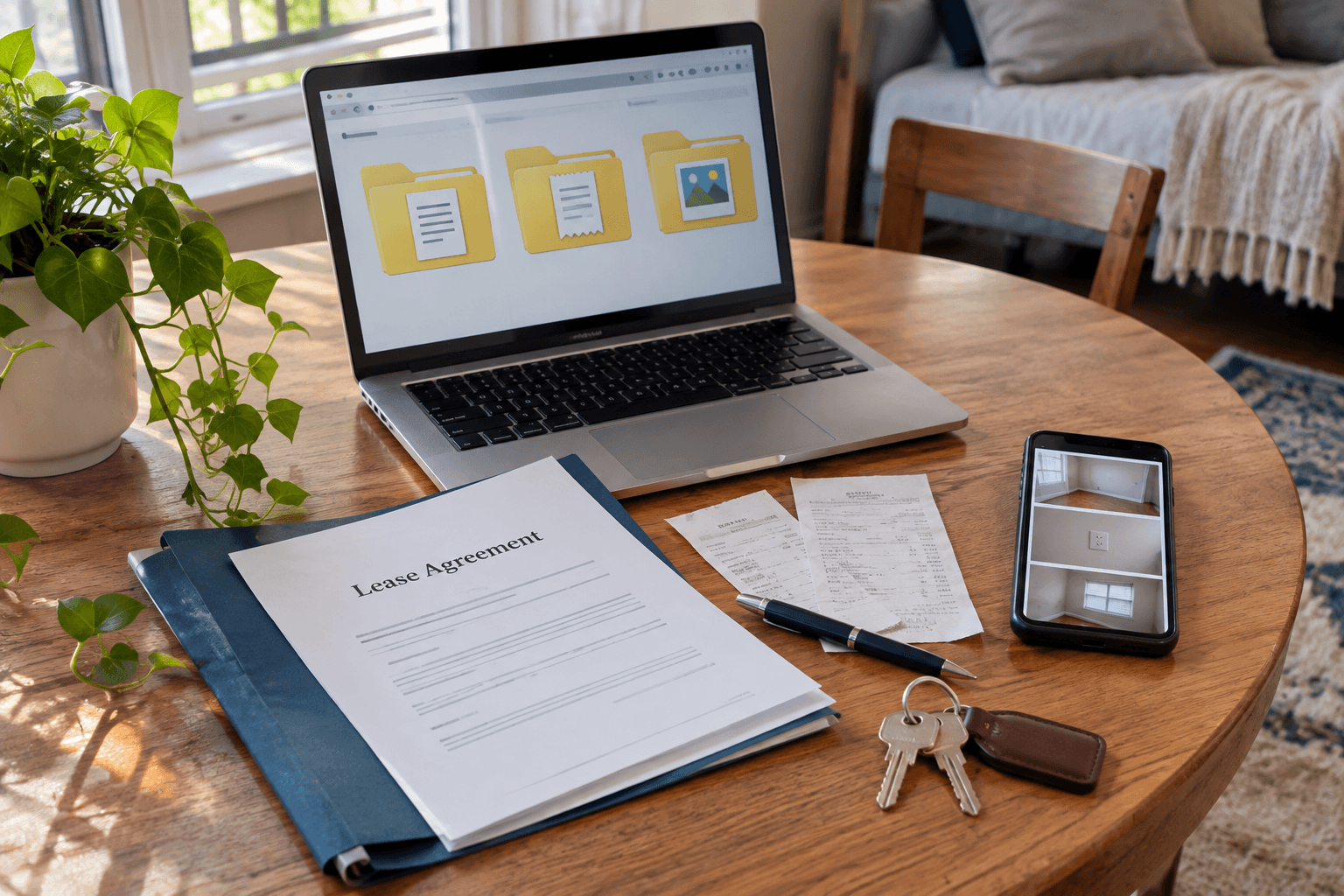
Pick a single cloud folder you can reach from your phone and laptop, such as the cloud storage you already use. Name it something obvious, like "Apartment 2026-27." Then add a few subfolders:
- 01 Lease and Paperwork: the signed lease, addenda, guarantor forms, and any rules or policies
- 02 Move-In Photos and Videos: your documentation from day one
- 03 Payments and Receipts: rent, deposit, fees, and utilities
- 04 Messages with Landlord: emails, portal messages, and notes from calls
- 05 Maintenance and Issues: repair requests and photos of problems
- 06 Move-Out: your final walk-through photos and any move-out notices
Share the folder with a parent or a trusted roommate if it makes sense. If you cosigned or have a guarantor, they may want access to the lease paperwork.
Step 2: Save the Lease and Core Documents
As soon as you sign, save a clean copy of the full lease, not just the first page. Include every addendum, move-in condition form, parking agreement, and pet policy. If anything arrives on paper, take a clear scan or photos of each page. Note the key dates in one place: the start date, end date, rent due date, and any notice deadlines. Put those dates in your phone calendar with reminders.
Step 3: Document the Unit on Move-In Day
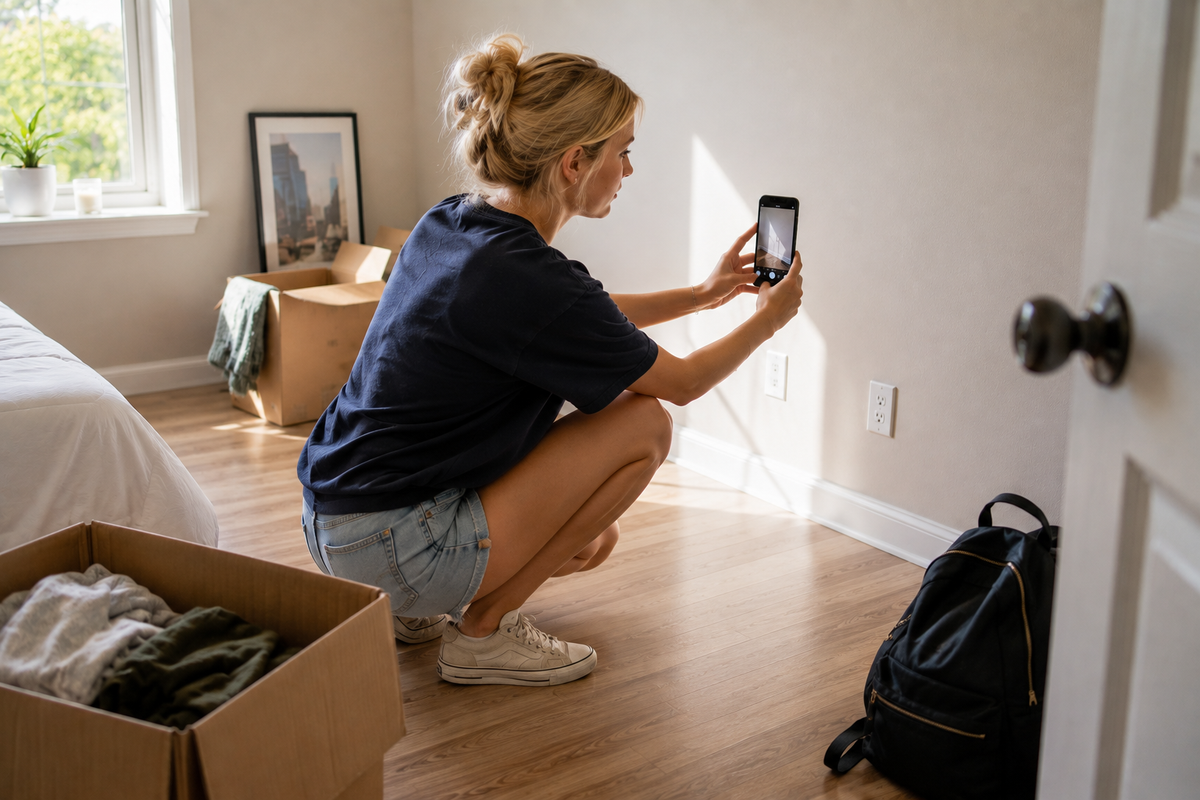
This is the most important set of files you'll make. On move-in day, before you unpack:
- Walk through every room and take photos and a slow video of walls, floors, ceilings, windows, appliances, and bathrooms.
- Zoom in on existing damage, like scuffs, stains, carpet wear, and broken blinds.
- Check that the photos are dated. Most phones add a date automatically, but confirm.
- Fill out any move-in condition form, and keep a copy.
- Send your photos to the landlord by email or portal and keep the sent message, so there's a timestamp on the other end too.
"Move-In Day Checklist for Off-Campus Student Housing" walks through what to look for room by room.
Step 4: Keep Payments and Receipts
It can sound like a lot, but save proof of everything you pay, including your deposit, first month's rent, application fees, pet fees, parking, and any utilities in your name. Save confirmation emails and screenshots of portal payments. If you pay by check or transfer, keep the record. Rename files so they're easy to find, such as "2026-09 Rent Payment." Don't store full account numbers or sensitive banking details in shared folders. Blur or leave them out of screenshots when you can.
Step 5: Put Communication in Writing
If you talk to the landlord on the phone, follow up with a short email: "Thanks for talking today. As we discussed, [summary]." Save every email and portal message in your Messages folder. For maintenance issues, save the original request, photos of the problem, and any replies. This is what turns "I told them" into proof.
Step 6: Build a Maintenance Log
Keep a simple note or spreadsheet with the date you noticed a problem, the date you reported it, how you reported it, and what happened next. Add photos. If something goes wrong later, like water damage or a long wait for a repair, this log shows a clear timeline. "What Do You Do If Your Apartment Floods or You Get Locked Out?" covers what to document in an emergency.
Step 7: Document Move-Out
Before you hand back the keys, clean the unit, then take dated photos and videos of every room, including appliances, closets, and the bathroom. Save your move-out notice, key return confirmation, and your forwarding address. If you're doing a lease takeover, document the condition and what's being passed on, so there's a record for both you and the incoming tenant.
How Long to Keep Everything
Keep the whole folder at least until your deposit is back and every balance is settled. After that, keep the lease, the final statement and proof of your last payments for a few more years. If a balance you already paid ever turns up with a collection agency, a dated receipt is a lot easier than trying to remember what happened.
Quick Habits That Make It Stick
- Save as you go. Don't wait until you need it.
- Use clear file names with dates.
- Back it up in a second place, like a different cloud service.
- Review it each semester and tidy up.
- Keep it after you move out until your deposit is returned and any dispute window has passed. How long to hold onto records varies, so check your lease and local rules.
This is general information, not legal advice. Rules about records, deposits, and disputes vary by lease, landlord, and state.
If your plans change before the lease ends, the paperwork the leasing office will ask for is already in your folder. Build your TakeOver listing for free and we'll introduce you to students near campus who need a place.
FAQs
Q - What documents should I keep from my apartment lease?
A - The signed lease and every addendum or renewal, move-in photos and the condition form, rent receipts, repair requests and replies, and your move-out paperwork, including the list of deposit deductions.
Q - Should I take pictures when I move into an apartment?
A - Definitely. Photograph and video every room before you unpack, with close-ups of existing damage. Turn in pictures and a move-in condition report to the landlord/leasing office, and keep a signed list of that damage if you can.
Q - How long should I keep my lease and rent receipts?
A - At least until your deposit is back and every balance you had is settled. Keeping proof of payment for a few years after that is cheap insurance, and easier to recall than your memory.
Q - Do repair requests have to be in writing?
A - It depends on your lease and your state, but it's always a good idea. Even if the first conversation is in person, follow up with an email to confirm what was said and any commitments afterward. Writing it down is always easier to prove later.
Q - What do I need to get my security deposit back?
A - Move-in and move-out photos, your signed condition list, a written forwarding address and the itemized list of any deductions. Landlords typically have to document any deductions from your security deposit, so your documentation can definitely come in handy.
Off-campus housing transitions can be frustrating and confusing. Searching for answers and not sure where to start? That's why we're here. Email the Team at hello@myleasetakeover.com, or send us a message on Instagram or Facebook. We’re glad to help.
Written by the Team at myleasetakeover.com | Join the Takeover.
We started myleasetakeover.com because we've been there: a housing plan that changed overnight with no clear next step. We're here to help students and parents navigate housing transitions, so you don't have to figure it out alone.
They always say, knowledge is power....
 Janelle Rawlston
 Janelle Rawlston